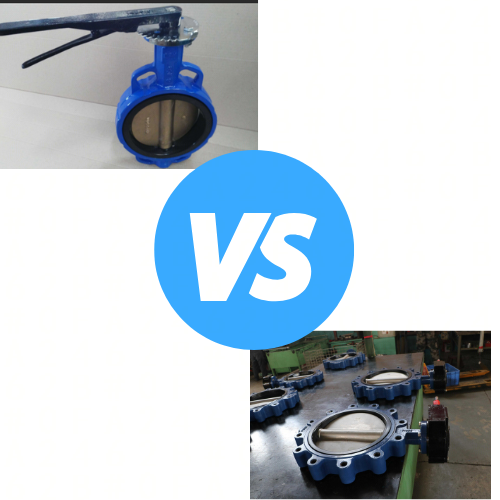
Bei der Auswahl einer Absperrklappe für Ihr Rohrleitungssystem stehen Ingenieure häufig vor der Frage, ob sie eine Wafer- oder eine Lug-Absperrklappe wählen sollen. Obwohl sie auf den ersten Blick ähnlich aussehen mögen, unterscheiden sich diese beiden Ventiltypen in Konstruktionsmerkmalen, Installationsanforderungen und Anwendungsvorteilen.
Was ist ein Wafer-Absperrventil?
A Scheiben-Absperrklappe Das Ventilgehäuse ist einfach konstruiert und passt zwischen zwei Rohrflansche. Es besitzt keine Gewindeeinsätze, sondern wird durch lange Schrauben befestigt, die durch beide Flansche und das Ventilgehäuse verlaufen.
Hauptmerkmale:
- Kompaktes und leichtes Design
- Geringere Kosten im Vergleich zu Lug-Ventilen
- Für die Installation werden sowohl Flansche am Zulauf als auch am Ablauf benötigt.
- Kann nicht Bereitstellung einer Sackgassenversorgung (die nachgelagerte Rohrleitung muss vorhanden sein)
- Ideal für beengte Platzverhältnisse und allgemeine Ein-/Aus-Anwendungen
Typische Anwendungsbereiche:
- Wasserversorgung und -verteilung
- Heizungs-, Lüftungs- und Klimaanlagen
- Allgemeine industrielle Rohrleitungen
- Lebensmittel- und Getränkeverarbeitung
- Landwirtschaftliche Bewässerung
Was ist eine Lug-Butterfly-Ventil?
A Absperrklappe mit Lug-Anschluss Das Ventilgehäuse verfügt über Gewindeeinsätze (Ansatzösen) auf beiden Flanschflächen. Diese Konstruktion ermöglicht die direkte Verschraubung des Ventils mit den Flanschen mittels separater Schrauben auf jeder Seite.
Hauptmerkmale:
- Schwerer und etwas teurer als Wafer-Typen
- Gewindeeinsätze an beiden Flanschen
- Unterstützt Sackgassendienste bei vollem Nenndruck
- Kann auch mit nur einer angeschlossenen Seite installiert werden – die nachgelagerten Rohrleitungen können zur Wartung entfernt werden.
- Geeignet für Isolationsanwendungen am Ende von Leitungen
Typische Anwendungsbereiche:
- Pipeline-Isolation (Sackgassendienst)
- Kläranlagen
- Brandschutzsysteme
- Chemische Verarbeitungsanlagen
- Anwendungen, bei denen eine nachgelagerte Wartung erforderlich ist
Hauptunterschiede: Wafer- vs. Lug-Absperrklappe
1. Konstruktion und Karosseriebau
| Besonderheit |
Wafer-Absperrklappe |
Lug-Absperrklappe |
| Body Threads |
Keine Gewindeeinsätze |
Gewindeeinsätze auf beiden Seiten |
| Bolzentyp |
Lange Durchgangsbolzen |
Separate Schrauben pro Seite |
| Gewicht |
Feuerzeug |
Schwerer |
| Von Angesicht zu Angesicht |
Standard gemäß API 609 |
Standard gemäß API 609 |
2. Fähigkeit zum Service in Sackgassen
Dies ist die am wichtigsten Unterschied:
- Waferventil: Benötigt Flansche auf beiden Seiten. Wenn die nachgelagerte Rohrleitung entfernt wird, kann das Ventil den Druck nicht halten – es wird abspringen.
- Anschlussventil: Kann den vollen Nenndruck auch mit nur einem angeschlossenen Flansch halten. Die Gewindeösen sichern das Ventilgehäuse auf jeder Seite unabhängig voneinander.
Wann man sich für eine Öse entscheiden sollte: Wenn Ihr System regelmäßige Wartungs-, Reinigungs- oder Rohrleitungsarbeiten erfordert, ist ein Absperrventil mit Lug-Anschluss die richtige Wahl.
3. Installation und Wartung
| Aspekt |
Wafer |
Schleppen |
| Installation |
Schnellmontage – zwischen Flansche passen, Durchgangsbolzen einsetzen |
Benötigt auf beiden Seiten separate Schrauben. |
| Rohrausrichtung |
Kritisch – Fehlausrichtung verursacht Leckage |
Nachsichtiger |
| Wartungszugang |
Beide Seiten müssen entleert werden |
Eine Seite kann isoliert und entwässert werden. |
| Downstream-Entfernung |
Nicht möglich |
Möglich bei vollem Nenndruck |
4. Kostenvergleich
- Wafer-Absperrklappe: Im Allgemeinen 10-20 % geringere Kosten als vergleichbare Flanschventile
- Lug-Absperrklappe: Höhere Material- und Bearbeitungskosten aufgrund von Gewindeeinsätzen
- Gesamtinstallationskosten: Bedenken Sie, dass Lug-Ventile die Systemkosten senken können, da an Wartungspunkten keine zusätzlichen Absperrventile benötigt werden.
5. Druck und Temperatur
Sowohl Wafer- als auch Lug-Absperrklappen sind in den gleichen Druckklassen erhältlich: Klasse 125 / 150, Klasse 250 / 300, PN10 / PN16 / PN25.
Der Temperaturbereich hängt vom Sitzmaterial ab, nicht von der Karosserieform:
- EPDM: -30 °C bis +120 °C
- NBR (Buna-N): -20 °C bis +100 °C
- PTFE: -20 °C bis +180 °C
- FPM (Viton): -20 °C bis +200 °C
So wählen Sie die richtige Absperrklappe: Wafer- oder Lug-Absperrklappe
Wählen Sie den Wafertyp aus, wenn:
- Ihr Budget ist ein Hauptanliegen.
- Die Pipeline ist durchgehend, eine stromabwärts geplante Entfernung ist nicht vorgesehen.
- Platz und Gewicht sind begrenzt
- Die Anwendung dient der allgemeinen Ein-/Ausschaltsteuerung in Wasser- oder HLK-Systemen.
- Beide Flansche sind immer verbunden
Wählen Sie den Anschlusstyp aus, wenn:
- Eine Sackgassenverbindung oder eine Trennung am Leitungsende ist erforderlich.
- Die Pipeline erfordert regelmäßige Wartungsarbeiten an einer Seite.
- Sie möchten die Flexibilität haben, nachgelagerte Rohrleitungen zu trennen, ohne das System entleeren zu müssen.
- Die Anwendung findet sich in den Bereichen Abwasserbehandlung, Brandschutz oder chemische Verarbeitung.
- Eine zukünftige Erweiterung der Pipeline ist geplant.
Laux Ventil-Produktpalette
| Ventiltyp |
Verfügbare Größen |
Druck |
Materialien |
| Wafer-Absperrklappe |
2" - 48" (DN50 - DN1200) |
Klasse 150 / PN16 |
Sphäroguss, Gusseisen, CF8M Edelstahl |
| Lug-Absperrklappe |
2" - 48" (DN50 - DN1200) |
Klasse 150 / PN16 |
Sphäroguss, Gusseisen, CF8M Edelstahl |
| PTFE-ausgekleidete Absperrklappe |
2" - 24" (DN50 - DN600) |
Klasse 150 / PN16 |
PTFE-ausgekleidetes duktiles Gusseisen |
| AWWA C504 Absperrklappe |
4" - 48" (DN100 - DN1200) |
Klasse 150B / 250B |
Sphäroguss |
Häufig gestellte Fragen (FAQ)
Kann eine Wafer-Absperrklappe für den Einsatz in Sackgassen verwendet werden?
NEIN. Eine Wafer-Absperrklappe benötigt zur sicheren Befestigung Flansche auf beiden Seiten. Sie kann bei keinem Druck einen druckdichten Betrieb gewährleisten.
Ist eine Absperrklappe mit Lug-Anschluss teurer als eine mit Wafer-Anschluss?
Ja Sie sind in der Regel 10–20 % teurer, da für Gewindeeinsätze zusätzliche Bearbeitungsschritte erforderlich sind. Der Kostenunterschied wird jedoch häufig durch die damit verbundene Wartungsflexibilität gerechtfertigt.
Welches ist besser für Wasseraufbereitungsanlagen?
Lug-Absperrklappen Sie werden im Allgemeinen in Wasser- und Abwasseraufbereitungsanlagen bevorzugt, da sie die Isolierung einzelner Ventile zur Wartung ermöglichen, ohne dass das gesamte System abgeschaltet werden muss.
Worin besteht der Unterschied bei den Druckwerten?
Sowohl Wafer- als auch Lug-Absperrklappen sind in denselben Druckklassen (Klasse 125/150/300, PN10/PN16) erhältlich. Es gibt keinen prinzipiellen Unterschied in der Druckangabe zwischen den beiden Bauformen.
Abschluss
Die Wahl zwischen einem Wafer- vs. Lug-Absperrklappe Es kommt auf Ihre spezifischen Anwendungsanforderungen an:
- Wählen Sie eine Waffel. für kostensensible, kontinuierliche Rohrleitungsanwendungen, bei denen beide Flansche verbunden bleiben.
- Wählen Sie die Öse. für Anwendungen, die eine sichere Bedienung am Ende der Leitung, flexible Wartungsmöglichkeiten oder eine Isolierung am Ende der Leitung erfordern.
Sie sind sich noch nicht sicher, welcher Ventiltyp für Ihr Projekt der richtige ist? Kontaktieren Sie das Ingenieurteam von Laux Valve – wir helfen Ihnen bei der Auswahl der optimalen Lösung basierend auf Ihren Systemanforderungen, Ihrem Budget und Ihren Betriebsbedingungen.
Kontaktieren Sie Laux Valve noch heute!
E-Mail: james@lauxvalve.com
WhatsApp/Telefon: +86 18920833829
Webseite: www.lauxvalve.com
Fabrik: Tianjin, China
Mit mehr als 13 Jahren Erfahrung in der Herstellung von Absperrklappen ist Laux Valve Ihr zuverlässiger Partner für hochwertige Wafer- und Lug-Absperrklappen – zertifiziert nach ISO 9001, CE, WRAS und NSF 61.


